What's the Difference Between Flat, Eggshell, and Satin Paint Finishes?
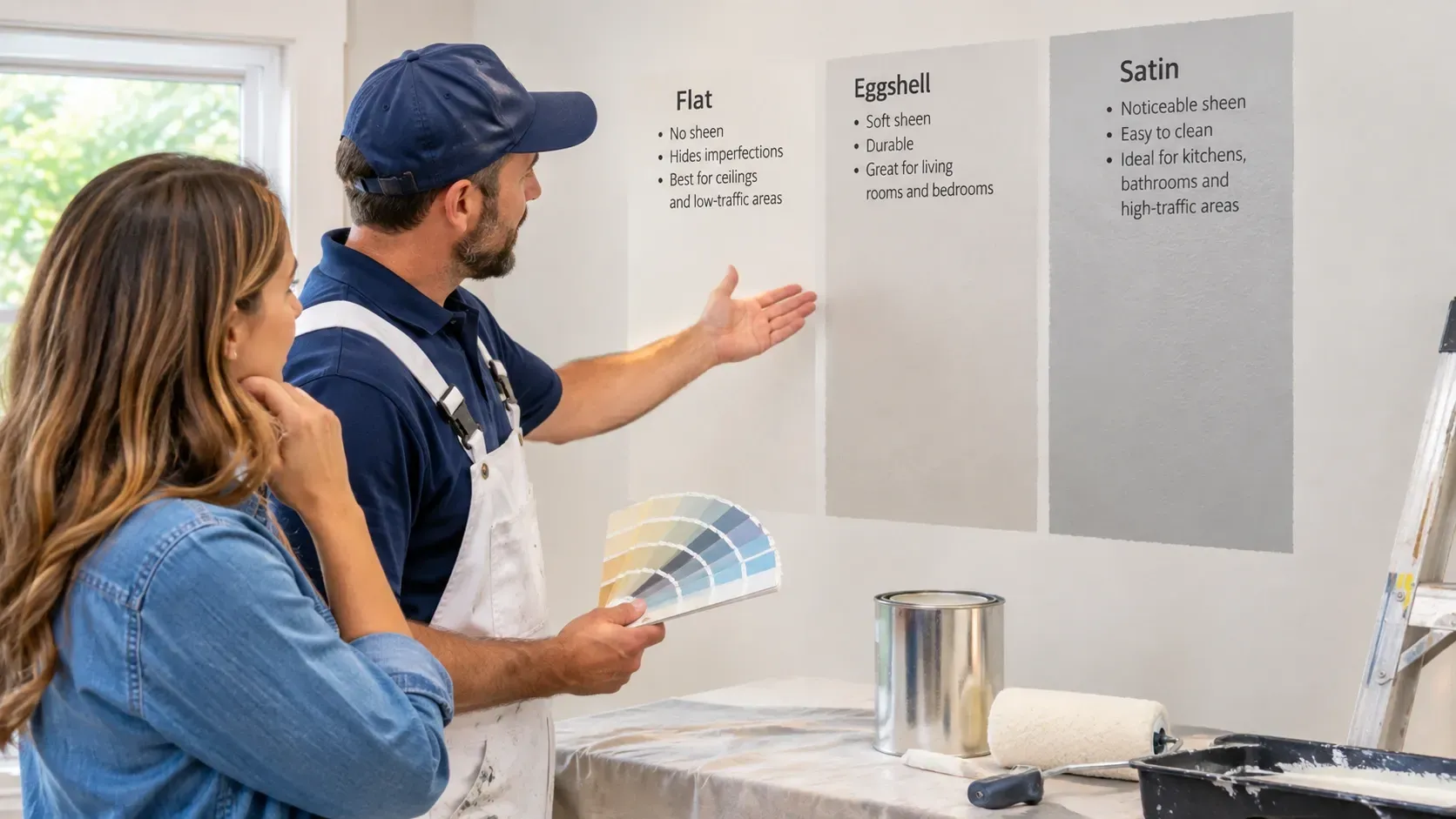
Table of Contents
- Introduction
- What a Paint Finish Actually Is
- Flat, Eggshell, and Satin Explained
- How Flat vs Eggshell vs Satin Compare in Daily Use
- Best Paint Finish for Each Room
- What Typical Online Advice Overlooks
- A Practical Way to Choose Your Finish
- Conclusion
- Frequently Asked Questions
Key Takeaways
- Flat paint hides wall imperfections best but marks and scuffs more easily, which makes it a good fit for ceilings and low-traffic rooms.
- Eggshell has a soft, low sheen and moderate durability, so it is a common choice for living rooms, dining rooms, and bedrooms.
- Satin is shinier and easier to wipe clean, which suits kitchens, bathrooms, hallways, and busy commercial spaces.
- A higher sheen shows more surface flaws, so the condition of the wall matters as much as the type of room.
- Paint quality, surface prep, and lighting all affect how a finish looks and wears, so sheen alone does not decide the result.
Introduction
For most homes, flat paint suits ceilings and low-traffic walls, eggshell works well in living areas and bedrooms, and satin is the better pick for busy or moisture-prone rooms like kitchens, bathrooms, and hallways. The difference comes down to sheen, which is how much light the dried paint reflects: flat reflects the least and hides flaws, eggshell adds a soft glow, and satin is shinier and easier to clean. Understanding how these paint finishes behave makes it much easier to plan any interior painting project without second-guessing your choice at the paint counter.
The choice matters because finish affects more than looks. It changes how visible wall imperfections are, how well walls handle cleaning, and how touch-ups blend in later. For homeowners and business owners in Newburgh and across the Hudson Valley, where many homes and buildings have older walls with some surface wear, the wrong sheen can highlight flaws that the right one would soften.
This guide explains how flat, eggshell, and satin differ, where each tends to work best, and what to weigh before you buy paint.
What a Paint Finish Actually Is
A paint finish, also called sheen, describes how glossy paint looks once it dries. The scale runs from flat or matte at the low end, through eggshell, satin, and semi-gloss, up to high-gloss at the top.
Sheen comes from the formula. Paints with more resin, the binder that holds everything together, dry to a smoother surface that reflects more light. Flat paint has more pigment and fillers, which scatter light and create a velvety, non-reflective look.
There is no single industry standard for how glossy each level must be. Eggshell from one manufacturer can look slightly different from another brand's eggshell.
Flat, Eggshell, and Satin Explained
Flat (Matte) Finish
Flat paint has the least sheen, which makes it the best of the three at hiding wall imperfections, but it is also the least resistant to scuffs and scrubbing.
Because it absorbs light instead of reflecting it, flat paint makes bumps, patches, and roller marks much less noticeable. That is why it is a go-to choice for ceilings and for walls with minor damage. Touch-ups also blend more easily since there is no sheen to mismatch.
The trade-off is durability. Flat paint can mark when rubbed, and aggressive cleaning may burnish or wear through the finish. Newer formulas have improved washability, but a flat wall is still generally less forgiving than a higher sheen in places people touch often.
Eggshell Finish
Eggshell has a low, soft sheen and moderate durability, which makes it a common middle ground for living rooms, dining rooms, and bedrooms.
It reflects a little more light than flat, so walls look slightly warmer and more finished, while still hiding most minor flaws. It can usually be wiped gently with a damp cloth.
Where it falls short: in rooms with heavy moisture or grease, eggshell may not hold up as long as satin. It can also show surface imperfections under strong, angled light.
Satin Finish
Satin has a smooth, noticeable sheen and stronger resistance to moisture and stains, which makes it practical for kitchens, bathrooms, hallways, and busy commercial areas.
Its higher resin content creates a tougher surface that handles wiping and light scrubbing better than flat or eggshell. That helps where fingerprints, splashes, and steam are part of daily life.
The cost of that durability is visibility. Satin reflects more light, so dents, patches, and uneven drywall seams can show through, especially near windows. Roller marks are also easier to see, and a touch-up can look different from the surrounding wall, an effect painters call flashing. Careful prep and application matter more with this finish.
How Flat vs Eggshell vs Satin Compare in Daily Use
Side by side, the three finishes differ in a handful of practical ways.
Appearance. Flat looks velvety and deep, eggshell looks soft with a slight glow, and satin looks smooth with a gentle, clear shine.
Hiding flaws. Flat is the most forgiving, eggshell is moderately forgiving, and satin is the least forgiving of the three.
Cleaning. Satin handles repeated wiping best, eggshell tolerates gentle cleaning, and flat does best with a light touch.
Touch-ups. Flat blends most easily. Eggshell is usually manageable. Satin is the most likely to leave a visible patch if the touch-up is not done carefully.
Moisture. Satin generally copes best, but no interior sheen replaces proper ventilation. Persistent moisture problems need to be fixed before painting, whatever the finish.
Best Paint Finish for Each Room
These are common starting points, not strict rules. Room use, wall condition, and lighting can change the right call.
Living rooms and dining rooms: Eggshell is the usual choice for its balance of appearance and wipe ability. Flat can work well in formal rooms with little wear.
Bedrooms: Flat or eggshell. Bedroom walls tend to see less contact, so a softer sheen is practical. Kids' rooms may do better with eggshell or satin for easier cleaning.
Kitchens: Satin is common because of steam, grease, and frequent wiping. Homeowners updating cabinets or layouts as part of a kitchen remodel often choose the wall finish at the same time so everything coordinates.
Bathrooms: Satin, or semi-gloss near showers and tubs. Moisture is the main concern here.
Hallways and entryways: Eggshell or satin. These areas collect scuffs from bags, shoes, and hands.
Ceilings: Flat is typical because it hides imperfections and reduces glare from overhead lighting.
Trim, doors, and baseboards: Satin or semi-gloss, since these surfaces get touched and bumped the most.
Offices, retail spaces, and other commercial areas: Business owners often use eggshell for general areas and satin for high-traffic corridors, restrooms, and break rooms that get cleaned often. Some leases and property managers set requirements for finishes, so confirm those before buying paint.
What Typical Online Advice Overlooks
Most guides stop at "use satin in kitchens." Real projects involve a few more variables.
Wall condition matters as much as room type. A kitchen wall with patched drywall may look better in eggshell than satin, because satin will highlight the repairs. Sanding and skim-coating before painting reduces the problem, but that adds time and cost.
Lighting changes how a finish looks. Large windows, recessed lights, or lamps that cast light across a wall at a low angle exaggerate both sheen and surface texture. A finish that looks fine on a small sample in the afternoon may look different on a long hallway wall in the evening.
Higher sheen is not automatically higher quality. Sheen and quality are separate things. A good flat paint can resist scuffs better than a cheap satin. Binder quality, prep work, and application technique all play a part.
Small swatches can mislead. A swatch shows color, but not how sheen behaves across a full wall. Painting a test patch of about two feet square and checking it at different times of day gives a more reliable preview.
A Practical Way to Choose Your Finish
Work through these questions for each room:
- How much will people touch or clean this wall? More contact points toward eggshell or satin.
- How good is the wall surface? Visible patches or uneven texture point toward flat or eggshell.
- Is moisture or grease present? Satin or semi-gloss makes sense, once any leak or ventilation problem is fixed.
- How does light hit the wall? Strong, angled light calls for a lower sheen.
Here is a hypothetical example. Picture a hallway in an older Newburgh home with a few patched spots and a window at one end. Satin would handle scuffs well, but light from the window could highlight the patches. Eggshell, applied after the patches are sanded and primed, may offer a workable compromise. This is an illustration, not a rule, and a different wall could point to a different answer.
Conclusion
Flat, eggshell, and satin differ mainly in how much light they reflect, and that one trait shapes how each finish looks, cleans, and hides flaws. Flat is the most forgiving of imperfections, eggshell balances appearance with moderate durability, and satin is the tougher, shinier option for busy and moisture-prone spaces.
The best paint finish for each room depends on more than a general rule. Wall condition, lighting, traffic, and paint quality all affect the result.
Have Questions About Paint Finishes for Your Space?
If you're comparing paint finishes for a home or business and want a second opinion on what suits your walls, talking with an experienced painter can help you sort through the options. Wall condition, lighting, and room use all affect the answer, and a look at the actual space often settles questions that general guides can't.
Day One Custom Painting & Renovations works with homeowners and business owners in Newburgh, NY and nearby communities. If you'd like to talk through your project, reach out and ask about finishes, prep, or timing. You can also call (845) 728-5477. Finish decisions often tie into larger painting and renovation plans, so it helps to mention anything else you're considering.
Frequently Asked Questions
Q1: Is eggshell or satin better for walls?
Neither is better everywhere. Eggshell hides minor flaws better and suits low to moderate traffic rooms. Satin handles moisture and wiping better, which suits kitchens, bathrooms, and hallways. Wall condition and lighting can tip the choice either way.
Q2: Can I use flat paint in a kitchen or bathroom?
It is possible, but often not ideal. Flat paint tends to mark and stain more easily and resists scrubbing less than higher sheens. Some washable flat formulas perform better, though satin or eggshell is the more common choice for these rooms.
Q3: Does a higher sheen mean the paint lasts longer?
Not necessarily. Higher sheen usually resists scrubbing better, but overall durability also depends on paint quality, surface prep, and application. A quality flat can outlast a budget satin in a low-traffic room.
Q4: Can I use different finishes in the same room?
Yes. Painters commonly use flat on ceilings, eggshell or satin on walls, and satin or semi-gloss on trim. This puts the toughest finish on the surfaces that take the most contact.
Q5: Which finish works best for offices and retail spaces?
Eggshell works for general areas, while satin suits high-traffic corridors, restrooms, and break rooms that get cleaned often. Leases and property managers may set requirements, so confirm any specifications before buying paint.
Recent Posts